

AlSur brought together 35 organizations to connect human rights and technology agendas
The meeting in Buenos Aires brought together 40 people to share experiences on democracy, surveillance, artificial intelligence and children's rights, and to explore opportunities for regional collaboration.
On October 28, 2026, at the University of Palermo, we held the meeting Vulnerability and technology: a dialogue within civil society, with the support of Open Society Foundations. At AlSur, we convened this space to bring together digital rights organizations and organizations from other human rights fields, learn about their concerns and think about how to work together on shared challenges.
The day brought together 40 people linked to 35 organizations, networks and entities. AlSur's eleven member organizations held conversations with feminist, racial justice and trans health organizations, and with groups defending the rights of children and adolescents, among others.
The exchanges in Spanish and Portuguese turned that diversity into a working experience. Finding a shared language required paying attention to different ways of naming problems and to trajectories that do not start from the same concepts. The multicultural character of the day lay in that coexistence of accents, national contexts, and professional and territorial experiences. The composition sought to broaden the perspectives available on the region, without claiming that a single meeting could represent all of its diversity.
Sharing knowledge and building the questions
How does a discussion about surveillance change when it incorporates the experiences of those who face racial discrimination? What questions about privacy arise when thinking about measures to protect children on the Internet? The meeting sought to open up these intersections and recognize what each organization can contribute to a common conversation.
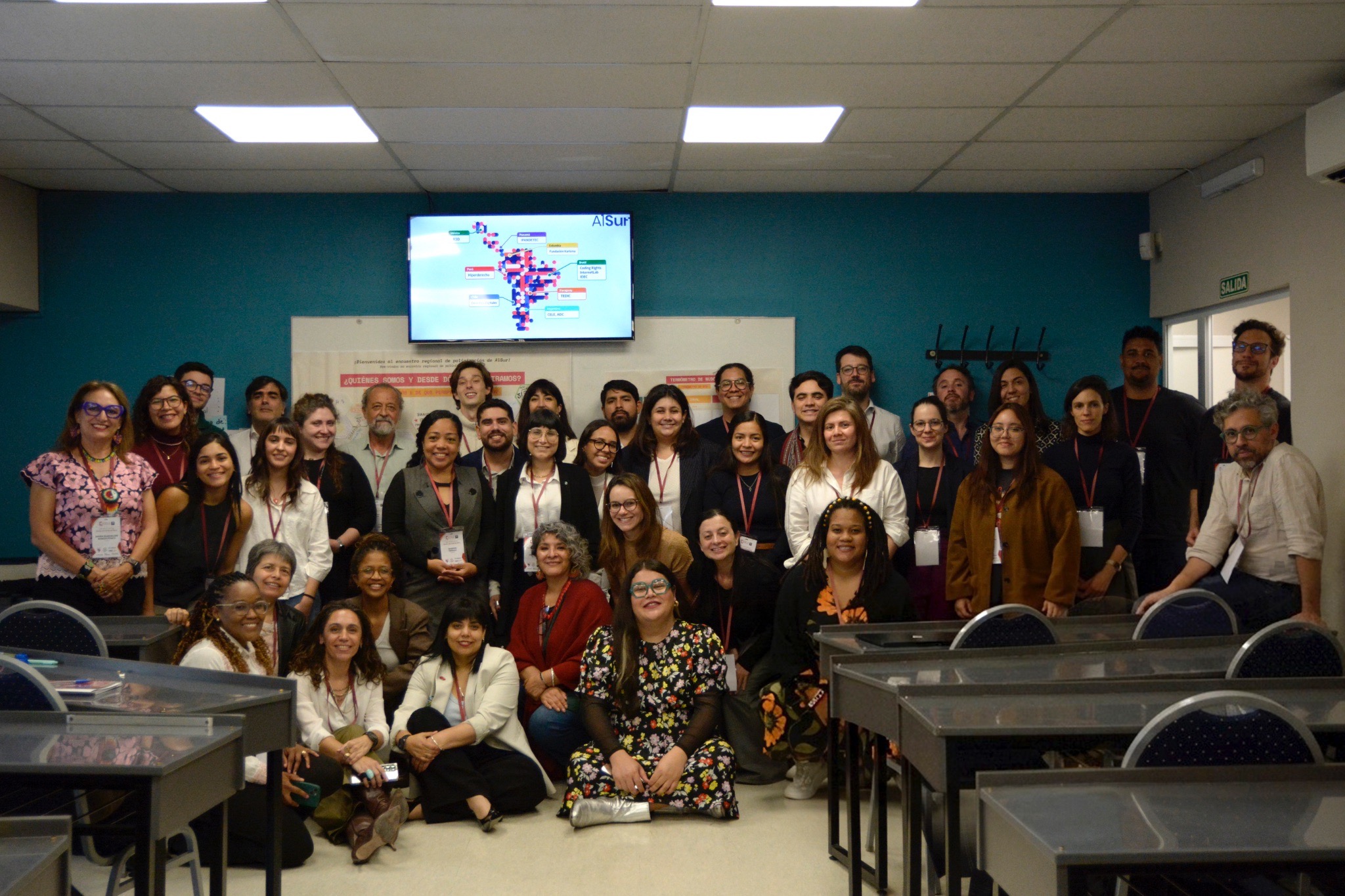
To facilitate the exchange, Cívica designed and adapted a learning pollination methodology. The approach invited participants to share knowledge and gather ideas from other experiences to revisit their own questions. In groups, participants presented their work in simple words, proposed topics and built a conversation agenda.
The themes that ran through the meeting
Democracy and freedom of expression. The rise of authoritarianism and the power of big tech companies were among the central concerns. Brazil's October 2026 elections provided context for questions about the influence of platforms on public debate. Participants discussed how to hold companies accountable and what safeguards should accompany regulation. There were differences on freedom of expression and content moderation that remained open for future exchanges.
Artificial intelligence regulation. Transparency, corporate accountability and civil society participation emerged as key issues. The conversation linked AI to concrete practices, such as facial recognition and profiling, and raised how to ensure that affected people can know about and challenge decisions that affect their rights.
Surveillance and inequalities. The experiences of women, Black people and people with disabilities led to a review of how those who already face discrimination are identified and controlled. Participants raised the need to produce evidence on these impacts, strengthen grassroots alliances and build their own narratives. The idea of “watching those who watch us” expressed the importance of sustaining a civil society capable of investigating and demanding oversight.
Children and adolescents in digital environments. The debates brought protection, autonomy and participation into dialogue. Participants discussed age verification, platform responsibilities and the need to listen to children and adolescents. They also raised how to assess the consequences of protection measures for privacy and access to information.
Recognizing the knots and exploring collaborations
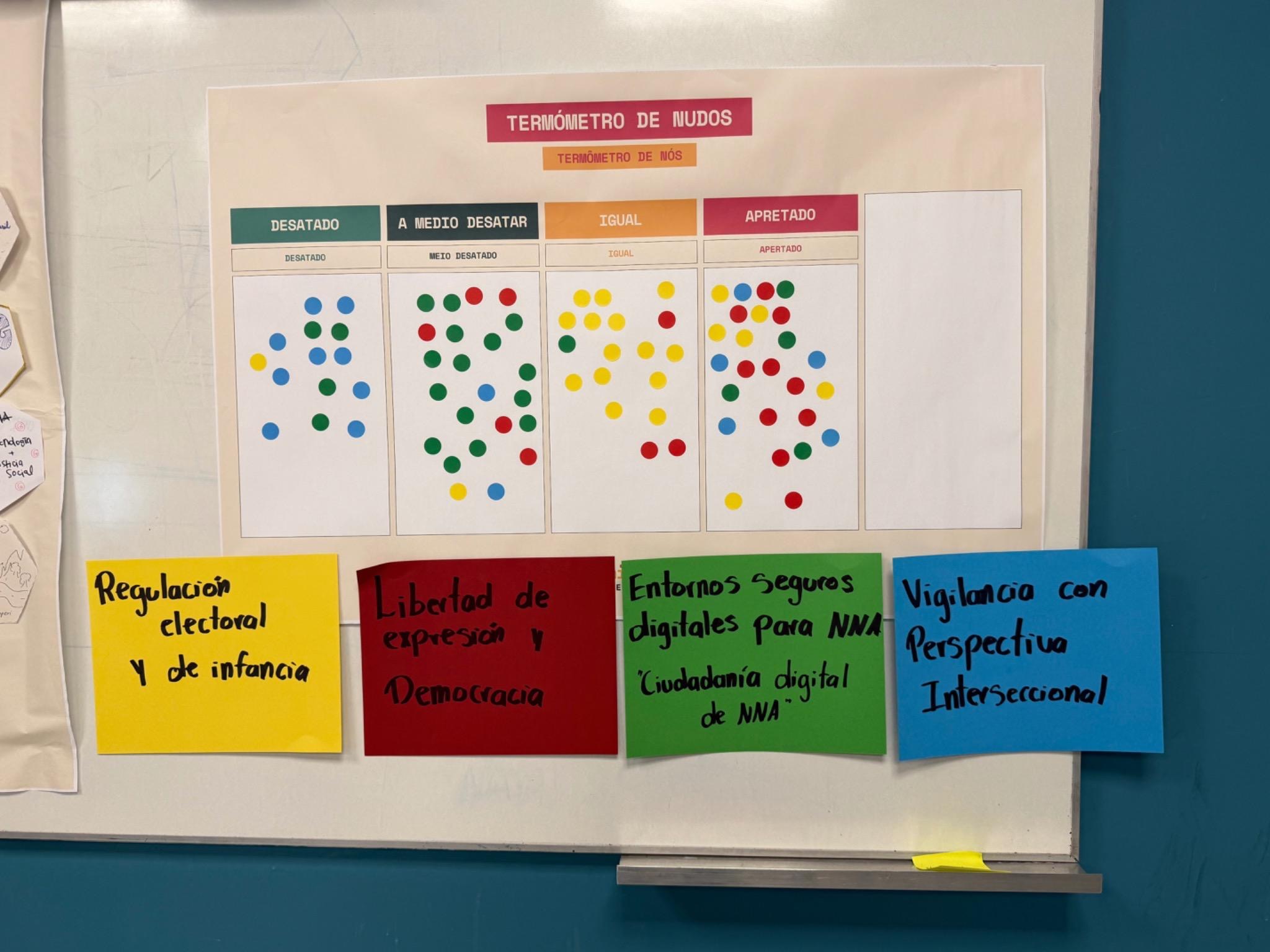
A “knot thermometer” made it possible to record where common ground had been found and where gaps persisted. The exercise made both the points of convergence and the disagreements visible. Then, the groups built Lego prototypes to represent possibilities for collaboration: among them, an amphitheater open to dialogue and a camera with interchangeable lenses to observe from different perspectives.
The day produced proposals to share evidence, expand regional research and sustain spaces for deliberation among organizations. Carrying them forward will require new agreements and resources. The meeting made it possible to identify interlocutors and common questions from which to keep building alliances to defend human rights in the digital environment.